

 Our customer experience baseline study measures the customer’s
experience across the breath of their journey and relationship with an
organisation. It identifies specific areas of poor performance, sources
of customer dissatisfaction and customer-driven improvement priorities.
It also identifies key aspects of customer complaint and word-of-mouth
behaviour and provides a measure of the organisation’s effectiveness
responding to customers.
Our customer experience baseline study measures the customer’s
experience across the breath of their journey and relationship with an
organisation. It identifies specific areas of poor performance, sources
of customer dissatisfaction and customer-driven improvement priorities.
It also identifies key aspects of customer complaint and word-of-mouth
behaviour and provides a measure of the organisation’s effectiveness
responding to customers.Baseline studies report on four key areas of customer experience that impact on loyalty and advocacy:
- Overall customer satisfaction and the impact current levels of service have on strategic outcomes for the organisations such as customer loyalty, advocacy and support
- Problems experienced by customers, identifying specific areas of poor performance and sources of customer dissatisfaction
- Customer contact behaviour (when things go wrong), identifying key aspects of customer complaint and word-of-mouth behaviour amongst the organisation’s customers
- Response effectiveness, providing a measure of the organisation’s effectiveness responding to its customers when they make contact about problems and concerns
The study identifies a set of clearly actionable customer-driven
product and service quality improvement opportunities that often include
a combination of strategic and tactical issues.
By estimating the financial impact of current level of satisfaction the study identifies opportunities for improvement based on the profitability of good service and the cost of poor service. Potential remedial actions and improvement initiatives can then be assessed in terms of their potential return on service level investment.
CTMA’s customer experience baselines range from studies commissioned for individual companies to industry-wide baselines providing industry-wide comparative findings for participating organisations. Industries in which CTMA has conducted baseline studies include retail banking, telecommunications, electricity and gas supply, and local government services.
Ongoing customer experience tracking programmes
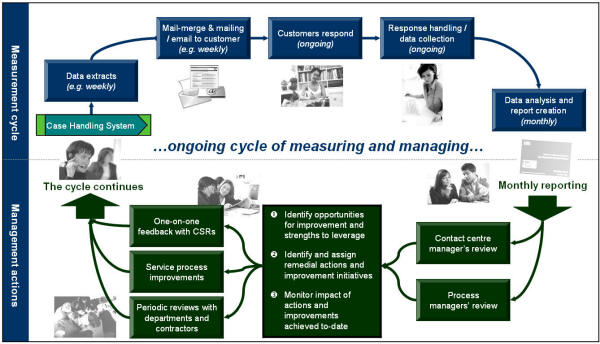 CTMA’s ongoing customer satisfaction-tracking programmes function as
an operational management tool. They monitor and support the management
and service quality improvement of specific customer processes,
touchpoints and interactions such as those in call centres, financial
services, local government, retail networks, passenger travel,
hospitality etc.
CTMA’s ongoing customer satisfaction-tracking programmes function as
an operational management tool. They monitor and support the management
and service quality improvement of specific customer processes,
touchpoints and interactions such as those in call centres, financial
services, local government, retail networks, passenger travel,
hospitality etc.
Monitoring satisfaction with service, transactions, relationships and brands, the programmes focus on management outcomes to track and manage performance against key drivers of customer satisfaction and loyalty to reduce the number of problems experienced by customers and to increase re-purchase, brand loyalty and advocacy.
The programmes help managers to:
- Review overall performance
in terms of customer satisfaction and loyalty and manage department level issues - Identify high and low performing individuals
(CSR, location, branch, route etc.), track performance trends and consider possible external influencing factors - Identify performance strengths and weaknesses
for each individual
(CSR, location, branch, route etc.) and use the results to manage improvement - Develop customer-driven service levels and
response standards
to maximise return on service investment.
CTMA’s tracking programmes are specifically designed to provide management with regular feedback on service performance. They are immediately actionable, allowing the manager to review the results quickly as part of their routine performance management process and plan remedial actions with minimum effort.
